
How Emotional Awareness Uncovers What You Really Feel
Picture this: You’re having a completely normal Tuesday. You walk into the kitchen, grab a mug for your morning coffee, and accidentally drop a spoon onto the floor. And suddenly, you feel an overwhelming surge of rage. A wave of guilt washes over you: “Why am I reacting like this? What is wrong with me? It’s just a spoon.”
If you’ve ever snapped at a partner for breathing too loudly, felt intense rage in mild traffic, or cried over a tiny inconvenience, here is the good news: There is nothing wrong with you.
You aren't broken, and you aren't "crazy." You just had an overreaction. Understanding what happened is the best way to build your emotional awareness.
The Iceberg Effect: Why Small Things Trigger Big Reactions
When we overreact, we tend to focus entirely on the trigger. We blame the dropped spoon, the slow driver, or the misplaced car keys. But in reality, an overreaction is almost never about the small thing in front of you.
Think of your emotional state like an iceberg:
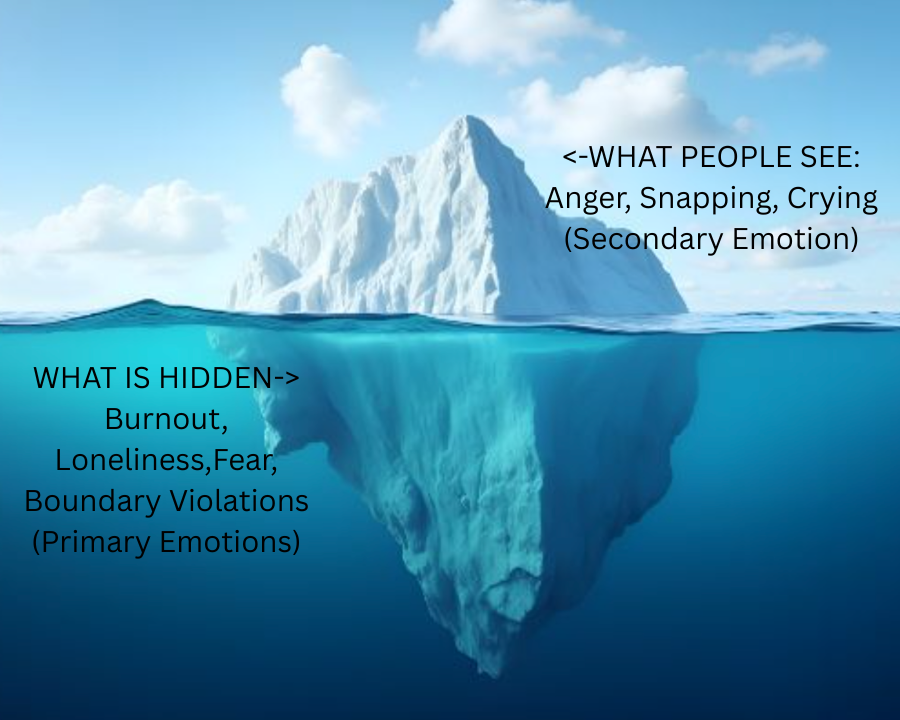
Primary vs. Secondary Emotions
Above the surface, you have secondary emotions. Most of the time, people feel angry as a secondary feeling because it protects them. It's loud, defensive, and makes us feel in charge for a short time when we feel useless.
What's really going on inside you are your main emotions, the raw, open ones like fear, shame, deep exhaustion, or not feeling appreciated. When primary emotions go unacknowledged for too long, your brain uses anger to blow off steam.
Stress Buildup (The Filled Cup)
Just picture holding a cup that's full of water. Every unread email, rushed morning, ignored boundary, and bad night's sleep adds to the drop. By 5 p.m., your cup is so full that the dropped spoon adds just one drop more, making water spill everywhere. The spoon didn't fill the cup, it just happened to be the last drop.
The main point is that anger is not usually a separate emotion. Most of the time, it's a warning system hidden behind a stronger, more vulnerable feeling that hasn't been heard.
What Happens in Your Body Before Logic Goes Offline

To master emotional awareness, you have to realize that overreaction started in your body long before it reached your mind. When your stress cup overflows, your brain senses a threat. It doesn't care that the threat is just a messy kitchen, it activates your survival instinct.
The Amygdala Takeover
The amygdala, which is the emotional center of your brain, rings the alarm and skips over your prefrontal cortex, which is the calm, logical part of your brain that is in charge of reasoning.
The Somatic Breadcrumbs
It's your body leaving you little clues before you say something you'll later regret:
- Your shoulders move up toward your ears.
- You either clench your jaw or grind your teeth.
- You start to breathe quickly and shallowly.
- You feel a sudden wave of heat in your face or a knot in your stomach.
Increasing your emotional awareness doesn't mean forcing yourself to "stay calm." It just means getting good at finding these physical clues 30 seconds before the bomb goes off.
The 3-Step "Cycle Breaker" Strategy
Step 1: Name the Physical Cue (5 Seconds)
Pay attention to your body as soon as you feel the heat. Think about what is going in your body:
"My jaw is tight and my face feels hot."
Why it works: Giving a feeling a name makes your brain use the logical prefrontal cortex again, which takes power away from the fear button.
Step 2: Look Beneath the Iceberg (15 Seconds)
Ask yourself the ultimate emotional awareness question:
"What is this reaction actually about?"
Is it really that I'm mad about the dishes, or am I just really tired from having to think about the whole house all week?
Step 3: Buy Time Before Responding (30–60 Seconds)
Allow yourself to take a break. You do not have to fix, solve, or respond in the heat of the moment. To make space, use a simple line:
"Right now I'm feeling a little stressed out. I need to take a two-minute break to drink some water before I say something out loud."
The Power of Pausing

Being emotionally aware doesn't mean hiding how you feel or acting like everything is fine. When you're about to lose it over something as small as a dropped spoon, take a deep breath. Take a moment to reflect on the feeling, look deeper, and allow yourself to slow down.
What is one small, everyday trigger that always seems to catch you off guard when you're stressed?